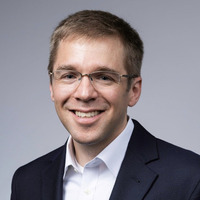
Physics and Astronomy Colloquium- Professor John Nichol, University of Rochester
Title: Quantum computing and quantum science with electron spins in silicon
Abstract: Electron spins in silicon quantum dots make excellent qubits because they are scalable and coherent. They have footprints that are only tens of nanometers on a side, and their coherence times can exceed seconds in purified semiconductors. In this presentation, I will discuss how to make and operate spin qubits. I will emphasize recent results from my group and others that demonstrate excellent performance in multi-qubit devices, highlighting their potential for realizing fault-tolerant quantum computing. I will also argue that electrons in semiconductors offer a unique set of tools to study how quantum systems interact with their environments. Using electrons in quantum dots, we can measure, control, and turn environments into resources.
Hosted by Professor Chandrasekhar Ramanathan and Professor Lorenza Viola
Zoom Webinar Link: https://dartmouth.zoom.us/j/91888702369?pwd=aUlaVEFYNGZHNlZWL0R3cEVWQXg4UT09