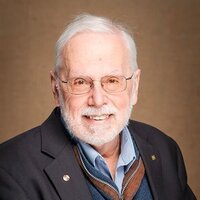
Part I:
Title: What is a superconductor, and why is there (again) this year a Nobel prize related to superconductivity?
Abstract: I will discuss the discovery of superconductivity, its role in your daily lives and in your future and why it leads to spectacular manifestations of quantum mechanics on a macroscopic scale. I will conclude with a sketch of the microscopic BCS theory of superconductivity, highlighting some of its most accurate predictions and the limitations that we are trying to overcome.
Part II:
Title: The theoretical challenges of high-temperature superconductivity.
Abstract: Copper oxide-based superconductors surprised the community when they were discovered in 1986 not only because they became superconducting at unprecedentedly high temperature, but also because the BCS mechanism did not explain why. In addition, even their non-superconducting state did not behave like ordinary metals. Traditional methods of solid-state physics that were so successful in giving the basis of all modern electronics failed for high-temperature superconductors. New theoretical methods developed in the last thirty years may be on the verge of giving us some accurate tools to find answers.
Hosted by Assistant Professor Rufus Boyack and Professor Lorenza Viola
Zoom Webinar Link: https://dartmouth.zoom.us/j/91888702369?pwd=aUlaVEFYNGZHNlZWL0R3cEVWQXg4UT09