- Undergraduate
- Graduate
- Foreign Study
- Research
- Inclusivity
- News & Events
- People
Back to Top Nav
Back to Top Nav
Back to Top Nav
Back to Top Nav
Back to Top Nav
Professor Wayne Scales, Director of Space, Virginia Tech University
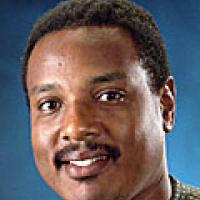
Title: "Some Recent Advances in Ionospheric Modification Research"
Abstract: The field of ionospheric modification research has seen a number of exciting new advances in recent years. Ground-based experiments involving the interaction of high power high frequency HF radiowaves with the ionosphere have led to substantial understanding of nonlinear plasma physics related phenomena involving plasma waves, instabilities, irregularities, and turbulence for many decades now. Due to the higher transmit power and refined diagnostic instrumentation in recent years, a renaissance in several well established research areas as well as breakthroughs into new areas rich in basic plasma physics have occurred. This presentation will focus on overviewing recent progress in two specific areas within ionospheric modification research. The first is Stimulated Electromagnetic Emissions SEE. SEE is secondary radiation produced by parametric decay instabilities (PDI) during ionospheric interactions with high power radiowaves. Although a substantial research agenda for several decades now, a rejuvenation has occurred with discoveries of new PDI mechanisms, some of which have direct alignment with those during laser plasma interactions. Also of critical importance are the associated new diagnostic capabilities including possible detection of proton precipitation during active geomagnetic conditions, triggering mechanisms for artificial ionization layers, sporadic E layer formation, and detection of minority ion species at lower ionospheric altitudes. The second research agenda to be discussed involves modulation of turbulence associated with the earth’s natural mesospheric dusty (or complex) plasma using high power radiowaves. In recent years, ability to modulate such turbulence has been shown to be a potential diagnostic for the charged dust particles. Also basic charging and diffusion processes which are of fundamental importance to the formation and evolution of the mesospheric dusty plasma can be studied. This overview of these two emerging topics within ionospheric modification research will provide discussions on experimental observations, theory, and development of new computational models.
Events are free and open to the public unless otherwise noted.